Posts

Mritsa Week 16: How Stress Negatively Affects Your Memory

Image
With AP season almost ending, learn how stress negatively affects your memory! Stress can severely disrupt how memories are formed. Studies indicate that high levels of stress make it difficult for individuals to create “short-term memories and convert them into long-term ones.” This means that during stressful periods, learning new information becomes challenging. Moreover, “stress can alter existing memories.” Every time we recall a memory, it gets slightly modified by our current state and experiences, therefore, high stress can distort our recollections, making them less accurate over time. The type of memory formed under stress is also affected. Events experienced during stressful times may be remembered with less accuracy. This phenomenon explains why eyewitness testimonies can be unreliable. Stress “influences our perception and recall ability,” making it harder to remember details accurately. Additionally, if questioned about an event and provided with misleading information, o...

Vishruth, Week 16: Bilingualism

Image
Bilingualism, the ability to fluently speak two languages, has long fascinated researchers for its profound impact on cognitive function, particularly memory. Far from being a mere linguistic skill, bilingualism is increasingly recognized as a cognitive asset that shapes the very architecture of the brain. If I were to guess, English is not the only language you are fluent in. Personally, I can read, write, and speak three languages: English, Tamil, and French. But can you imagine knowing the ins and outs of five, six… ten languages? Just imagine how much memory that must take—storing hundreds of thousands of conjugations and grammar rules. It took me years to even get the handle of one. It turns out, however, that the differential wiring of polyglots’ brains contributes to their ability to absorb new languages in a way that others can’t. In this text, I delve into the details of how these neuronal differences give rise to the gift of multilingualism. MIT News The brain’s language proc...

Taj Week 16: Would You Want to Have a Conversation With Aristotle?

Image
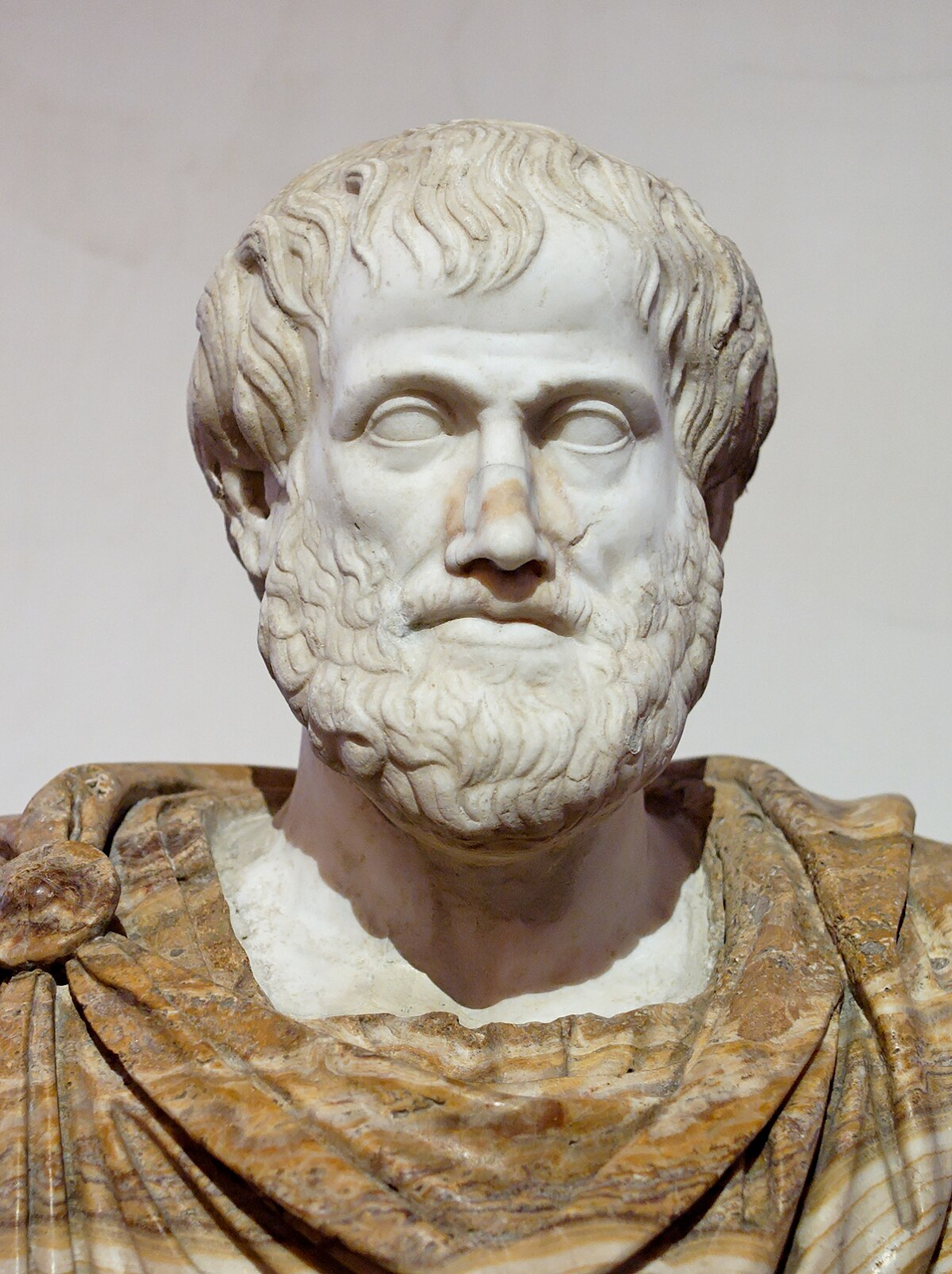
Would You Want to Have a Conversation With Aristotle Over the weekend, while I was taking one of my many breaks from studying AP testing materials, I stumbled upon an old keynote from none other than Steve Jobs. Usually soundbites from Jobs are quite electrifying, so I decided to watch the clip in its entirety. Jobs began his keynote with an interesting statement: he was extremely jealous of Alexander the Great. However, not for the obvious reasons. He was not jealous of Alexander's tactical genius and impressive military record. He was not jealous of Alexander's massive empire stretching from Greece all the way to northern India. He was jealous that Alexander's tutor was Aristotle. Jobs notes that you can read the writings of Aristotle, and you can consult a professor who intensely studied the works of Aristotle. But it is virtually impossible to get Aristotle's authentic view on any subject or question. Although this is not a profound or enlightening thought, Jobs fol...

Kallie, Week 16: A Healthy Dose of Shame

Image
Think back to an embarrassing moment in your life. Perhaps you said something foolish in front of a crowd. Or maybe—as I did recently—you weren’t paying attention and walked into the wrong classroom.  When you think about this incident, do you still feel a creeping sense of shame linger over you? Or do you not think much of it? Or perhaps you’ve successfully wiped the memory of any unfortunate incidents from your brain entirely. To some extent, there’s value in remembering our most shameful moments. If the source of our embarrassment is our own actions, then oftentimes there’s a lesson to be learned there. It serves our best interests to learn from our mistakes, even if the memory is an unpleasant one.  At the same time, it does you little good to unnecessarily expend energy dwelling for too long in the past. There is little point in spending too much time regretting what cannot be changed, as it only contributes to your misery and ultimately achieves nothing other than feedin...

Julia, Week 16 - A Cycle

Image
As the two-month summer break approaches, I’m starting to get reminded of the pleasant memories I’ve created over last year’s break. A trip to the Philippines so enjoyable still sticks with me and will remain as a part of my identity, as that was a time when I truly felt satisfied with myself and the people who I surrounded myself with. When coming across this opportunity to write personal blogs around the first month of school, I immediately went to write about my experience during the first days in the Philippines. Of course, to relate to those feelings of anticipation that started building up when attending my first days of APENG, I couldn’t help but recall those same feelings I felt when arriving back at the Philippines as I let the words for my blog flow freely onto my draft. But soon I will leave many more of these pressures behind and slowly mold into the comfort of writing with a new kind of rhetoric, and a new kind of future to look forward to. At least, for a little while, I ...

Sanchay Week 16: Learning and memorizing

Image
 Since we are currently in "testing season," time and effective learning are the two most important aspects of the lives of most students. However, how can we optimize our learning so that we minimize our time spent learning a topic and maximize the level of understanding and remembrance of it? According to the University of ST. Augustine for Health and Science, the first step to improving your learning is to "set the stage" by creating the conditions in "your body and external environment." They claim that the best way to optimize your environment and body for learning is by:  "Get[ting] a good night's sleep." Aim for getting "8 hours" of quality sleep every day. "Switch[ing] up your study environment." Avoid studying in your room every day, try working outside, in the kitchen, or in a coffee shop, as "a change in scenery can improve both your memory and concentration levels." "Listen[ing] to calm music....

Anirudh Week 16: Nostalgia and Its Influence on the Human Mind

Image
Have you ever experienced moments when you remember a time from the past and long for it to happen again?  I think we have all felt nostalgia at least once in our lives, reminiscing about a certain time that we want to relive. Sometimes it is more intense—overwhelming our thoughts with the memory—and other times, it remains for a brief moment. Nevertheless, this is a strange feeling that plays a significant role in our lives.  According to an article from the University of Southampton , nostalgia is a “complex emotion” with a “mixed affective signature.” People tend to “[feel] emotional,” experiencing a mix of happiness and a “sense of loss and longing.” The impact of nostalgia is profound, as people have a greater sense of “belongingness, affiliation, or sociality.”  For me, nostalgia offers a way to relieve some stress, especially before important tests. The memory of a calming experience helps me improve my attitude toward the approaching task, and I become filled with...

Eesha Week 16: Our Timeless Treasures

Image
  Our Timeless Treasures (a photo of me from one my favorite childhood memories)          In the tapestry of our lives, childhood memories are the vibrant threads that weave together to create the fabric of our identity. From the first steps we took to the melodies that lulled us to sleep, these memories have a profound impact on who we are today.     Childhood memories possess a purity and innocence untouched by the complexities of adulthood. They are the tender moments of joy, the innocent laughter with friends, and the warmth of familial love that continue to resonate with us, even as years pass by.  These memories serve as pillars of strength, guiding us through life's trials and uncertainties.      Yet, beneath their surface of innocence lies a reservoir of emotion that tugs at our heartstrings. The nostalgia of childhood memories that transport us back to a time when the world was filled wit...

Julia, Week 15 - Memories of an Aspiring Author

  I thought I was going to be an author when I was younger.      I had no idea where I felt this sudden spark of ambition, but six-year-old me kept cranking out stapled little booklets left and right. Writing these little stories helped distract me from the fact that I really had no true friends to have playdates with, my only “close” friend being a person that would always boss me around. The genres of these books would range from stories based on real events that would implement morals (since my life at the time consisted of many wild adventures with my family,) to a never-ending series of facts of an animal or certain color that I particularly enjoyed.       My most vivid memory involving this early passion for creating literature comes from a late spring afternoon in my first-grade classroom. Our only assignment that day was to be able to teach the entire class to do an activity that we genuinely enjoyed. Of course, with the only active hobby ...

Taj Week 15: Are You Destroying Your Brain?

Image
 Are you Destroying Your Brain? You might be thinking of your screen time, hours of sleep, diet, or physical activity among many other bad habits—which I too suffer from like all of us—to be the culprit and answer to this question. I thought so too when reading the title to an article published by writer David Nield; however, the habits above were not the answers to his question—although they could be just as destructive in their own respectful right ( Source ). According to a new research conducted, it seems just “the process of remembering…long-term memories” seemingly comes at a “high cost” as it causes “massive inflammation within the brain”( Source ). The writer reports the swelling within the brain causes “DNA damage in the nerve cells” when a person attempts to recall memories which get “fused into neurons” when being “retrieved from storage”( Source ). Usually brain swelling is associated with “terrible neurological problems such as Alzheimer’s and Parkinson’s disease”( Sou...

Kallie, Week 15: Capturing Memories

Image
With cell phones so easily accessible, it's easier than ever to capture a photo of any moment. Because this has always been the case for many of us, we may not recognize what a valuable luxury this is: to be able to snapshot precious memories and preserve them clearly for years to come, and allow us to better share them with others down the line. Prior to the invention of photography, the only way to preserve realistic images of anything was through painting, which would naturally take hours upon hours to complete. While this was not a particularly big issue when it came to landscape paintings, this had major implications for what was possible for capturing the likeness of people. Because a person would have to remain in the same position for so long, only static poses were possible, and it was recommended that the subject not smile to prevent muscle discomfort or cramping. Additionally, having paintings made of themselves was not something that was accessible to the average person...

Vishruth Week 15: Memory Palaces and Mnemonics

Image
Memory serves as the cornerstone of our existence. By preserving our experiences, knowledge, and identity, it is what distinguishes the human race from the rest of life on Earth. But it turns out that memory fluctuates in strength across our lifetimes—it is inconstant in that it can improve as well as worsen. That’s no reason to worry, however, because there are a myriad of techniques that have been developed to enhance memory. The ancient art of mnemonics stands out as a timeless method that continues to captivate the imagination of memory enthusiasts and cognitive scientists alike. Imagine constructing a mental edifice—perhaps a mansion or a familiar street—and furnishing it with vivid, memorable imagery. Each room, corridor, or object within this mental construct serves as a repository for specific memories or information. When traversing your memory palace mentally, you activate spatial cues that trigger associated memories, facilitating effortless recall. The Paris Review Memory p...

Mritsa Week 15: Why do we rewatch shows?

Image
I recently read a blog by one of our classmates, who was inspired by the television show Suits, about whether or not photographic memory is real. Suits is one of my favorite shows of all time and I have rewatched it four times. The student’s blog made me wonder why people rewatch shows when they know what will happen. There's a certain allure to revisiting the stories we know like the back of our hand, a comforting embrace in the form of familiar characters and plotlines. It's the reason why, despite the plethora of new content constantly vying for our attention, we find ourselves drawn back to the same beloved shows and movies time and time again. There is a “sense of security” in knowing what to expect, in immersing ourselves in a world where we are already aware of how the plot plays out ( Source ). Whether it's the cozy ambiance of a sitcom or the thrilling escapades of an action-packed series, rewatching allows us to rediscover the comfort of familiarity in an ever-ch...

Sanchay Week 15: Anxiety and Depression

Image
Living a happy life is something most people strive to achieve, however, to achieve this people must learn to enjoy the present. Without this ability, they can not live a fulfilling life as they will never have a moment in their existence that they appreciate. Some might say they can look back on their memories with fondness, but what good is it to reminisce a memory filled with melancholy? Living in the moment would enable you to make the conscious decision to appreciate any situation you are put in, making every moment in your life a memory that you can look back on with gratitude. As someone who has not faced clinical anxiety or depression, I characterize anxiety as the state of being stifled with fear of the future and depression as being paralyzed by the regret of the past. These two are the stems of unhappiness for most people. Depression causes a person to lose faith in themselves and feel guilty about their actions, this affects a person’s ability to create a life they can be p...

Eesha, Week 15: Lost In Time

Image
(a picture of my friends in 2023 during basketball season) Lost In Time      Nostalgia has a unique ability to transport us back in time, evoking memories of days gone by and stirring emotions both familiar and bittersweet. It is a powerful force that weaves through the fabric of our lives, connecting us to our past and shaping our present. At its core, nostalgia is a longing for the past—a yearning to recapture the sights, sounds, and sensations of bygone days. It's that rush of emotion when we stumble upon an old photograph, hear a favorite song from our youth, or revisit a cherished childhood memory.      Nostalgia plays a crucial role in shaping our sense of identity by connecting us to our personal history, cultural heritage, and shared traditions. It also fosters a sense of connection and belonging by reminding us of the people and places that have shaped our lives. Sharing nostalgic memories with friends and loved ones can deepen our relationships an...

Anirudh Week 15: "Photographic" Memory

Image
Reading one of the blogs from last week about photographic memory—which discussed whether it is actually possible for someone to have perfect memory—I began wondering about the literal meaning of the phrase.  The particular image that came to mind was a moment from last year when Lebron James broke the NBA record for all-time scoring. Scrolling through social media that day, one of the posts that I saw was a still shot of James in his motion, with the filled crowd visible in the background. The point of the post was to emphasize the numerous phones and cameras that were out to capture the historic moment.  I thought about how we have become accustomed to digital cameras in this golden age of technology. Especially with the advent of social media, photographs have become ubiquitous in modern society. Whenever we travel, experience a special moment, or simply witness an appealing view, we usually take out our phones and capture an image.   The social media post also p...

Julia Week 14 - What Happened to Living in the Moment?

Image
Using phones at a concert: Are they okay to use?     You’re attending your favorite artist’s concert, and you just so happened to purchase VIP tickets that placed you right in front of the ginormous confetti-filled stage. You start to see your idol confidently strut their way to a microphone, ready to let a series of enchanting melodies flow from their mouth and fly outward into the stadium with an energetic burst. You pull your phone out of your back pocket and immediately search for the camera app to record this unbelievable moment. The sea of people behind you—who are just as excited—eagerly do the same.  From the artist’s perspective, the stadium that was once filled with starlit eyes transformed into the flashy eyes of a phone rear camera, the light almost blinding them entirely. They feel the need to address something important, but just as you see them open their mouth to breathe out the first note, you excitedly press the red record button and- “Can you please p...

Taj Week 14: Is Photographic Memory Real?

Image
Is Photographic Memory Real? Over the weekend I was, after multiple pleas and asks from a family friend, to watch at least one season of Suits.  Although I do enjoy a good TV show, I personally was hesitant to watch overdramatized media; however, I was forced to keep my end of the promise. While beginning the series, I reached the iconic scene which epitomizes the show: when Mike Ross claims to have memorized all Barbi: Law  books, and he subsequently recites an entire verse from the choosing of his future boss Harvey Specter. This scene made me wonder. Is it possible to have photographic memory like Mike Ross? And can someone train themselves to bolster their photographic memory? Source My first instinct was to turn to Google and attempt the quintessential, clickbait, online survey which seems to be able to tell a person about any of their animating desires. I took the first survey I found; needless to say I failed and do not possess photographic memory, at least according to...

Kallie, Week 14: The Doorway Effect

Image
Perhaps you've heard of the "Doorway Effect." Chances are, even if you haven't, you've experienced it at least once in your life. The supposed doorway effect occurs when people forget things after walking through a doorway. For example, you might get up to grab a glass of water, only to forget what you got up to do after passing through the doorway out your room. Image from  Ms. Lennon's Blog According to Bond University , the idea originates from a 2011 study by researchers at the University of Notre Dame, in which they found that people were more likely to forget things after passing through doorways. They theorized that the brain had a tendency to erase those memories after passing through a threshold, as it believed that those memories were less likely to be relevant in the new context. However, more recent research has found that the doorway effect is not as simple or pronounced as previously thought. Researchers at Bond University attempted to replicate ...